
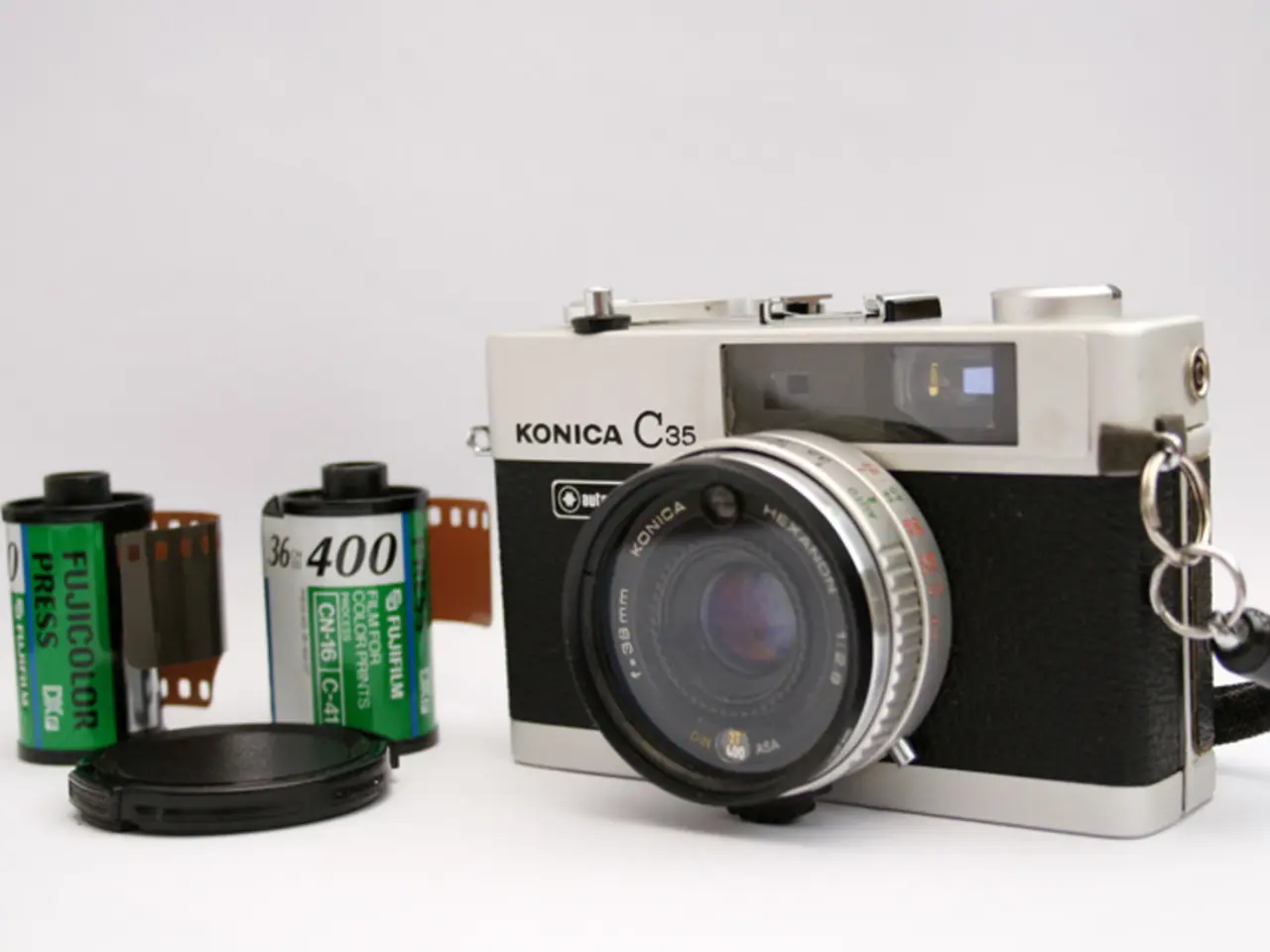
Unexpected development: Compact camera manufacturers rush to improve quality and revive compact cameras' popularity
In the age of smartphones, the convenience of having a camera built into our mobile devices has been a game-changer. However, the allure of a dedicated camera, specifically the fixed-lens compact variety, is making a comeback after a long absence from the market.
The Fujifilm XF1, introduced in 2012, is a prime example of this resurgence. With its sleek metal body, collapsing lens design, and a 12MP 2/3-inch EXR CMOS sensor, the XF1 offers a satisfying shooting experience, despite lacking a viewfinder. Its fixed lens, equivalent to 25-100mm, provides flexibility in lens focal length, and its features include manual zoom adjustment, RAW capture, popular Film Simulation profiles, and full manual control.
The compact camera's return to the limelight is largely due to its advantages in sensor size, lens focal length flexibility, and functionality for still photography. The Fujifilm X Half, with its 'half frame' vertical shooting feature, resembling smartphones, and the Ricoh GR III series, are gaining popularity, proving the enduring interest in higher-end compact cameras.
Industry insiders predict a new golden era for compact cameras, including smaller sensor and full frame compact cameras. Fujifilm might consider reviving the X10/X20/X30 line of compact cameras, which were popular among thinking photographers.
The camera industry is responding swiftly to this renewed demand. Manufacturers can boost the supply of currently available fixed-lens compact cameras relatively quickly, within months, by increasing production of existing models. For instance, Canon is already increasing production of popular compact cameras and planning new models like the PowerShot V series to meet demand in 2025.
However, developing brand-new compact cameras with updated sensors, lenses, and processors generally takes longer. Ricoh’s upcoming GR IV, scheduled for an autumn 2025 release, illustrates a typical development cycle for improved compacts with new technical features. Similarly, rumors about Sony potentially launching a new full-frame fixed-lens compact suggest such products are at least a year or more away.
The sudden revival in demand for compact cameras after years of decline due to smartphones has caught the industry somewhat off guard. Most manufacturers must now hasten their design and production efforts, but even catching up with discontinued popular models is challenging due to development lead times and supply chain factors.
Paul Burrows, an Honorary Fellow of the Institute Of Australian Photography (AIPP) with 40 years of experience, writes about cameras and photography for Australian Camera and ProPhoto magazines. He notes, "Digital compact cameras can be truly compact, offering a perfect balance between portability and performance for photographers seeking a device that fits their lifestyle."
As we move forward, it's clear that the compact camera is making a comeback, offering a unique blend of convenience, performance, and portability that continues to captivate photographers. The future of this classic photography staple is bright, with manufacturers working diligently to meet the growing demand for these versatile devices.
- In the face of smartphones, fixed-lens compact cameras like the Fujifilm XF1 are gaining popularity, offering a distinct shooting experience with features such as manual zoom adjustment, RAW capture, and manual control.
- The compact camera market is forecasted to enter a new golden era, with manufacturers increasing production of existing models and even developing new ones to meet the growing demand.
- Canon is already ramping up production of popular compact cameras and considering the introduction of new models like the PowerShot V series to cater to the demand in 2025.
- While developing brand-new compact cameras can take longer, examples like the upcoming Ricoh GR IV and potential Sony full-frame fixed-lens compact suggest that such products are at least a year or more away.
- Paul Burrows, a photographer and industry expert with 40 years of experience, emphasizes the perfect balance between portability and performance offered by digital compact cameras for photographers seeking a device tailored to their lifestyle.
- The sudden resurgence of interest in compact cameras after years of decline has presented challenges for manufacturers, as reintroducing popular models requires careful consideration of development lead times and supply chain factors.
- The return of compact cameras offers a unique blend of convenience, performance, and portability that continues to appeal to photographers today, signaling a bright future for this classic photography staple.




