
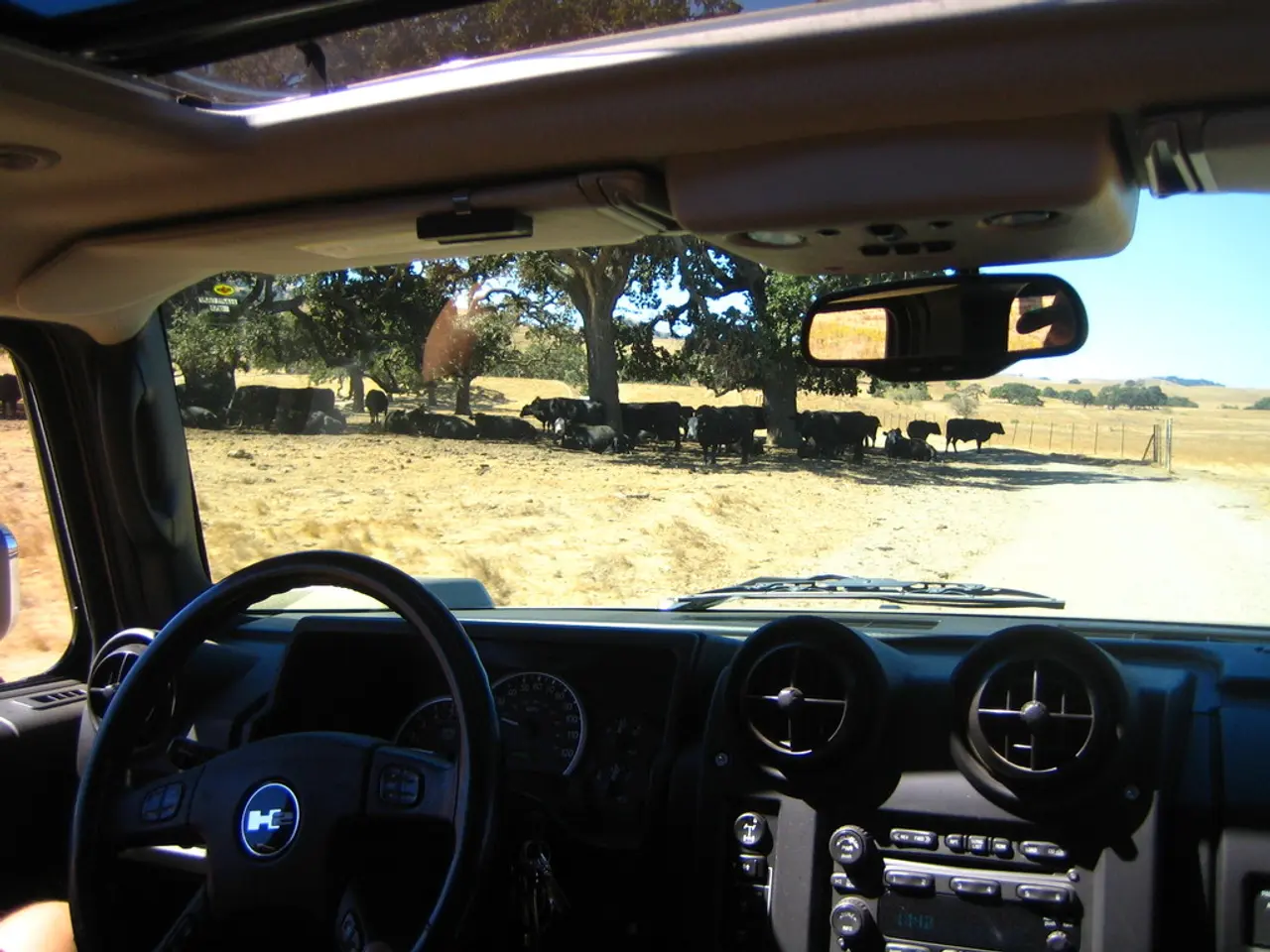
The sensor situated on your vehicle's windshield serves the purpose of distance measurement and regulatory functions.
In the automotive world, innovation never stops. Modern cars are now equipped with an array of sensors and cameras to improve safety, comfort, and convenience. Here's a look at some of the common weather and light sensors, as well as other advanced features, found in today's vehicles.
Rain Sensors
One of the most common sensors is the rain sensor. Usually located behind the windshield near the rearview mirror, these sensors use infrared beams to detect the presence and amount of rain on the windshield. When raindrops disrupt the beams and reduce light reflection, the system activates the automatic wipers and adjusts their speed accordingly, providing improved visibility without driver intervention [1][2].
Light Sensors
Light sensors monitor ambient light levels outside the vehicle. They can automatically turn headlights on or off depending on the time of day, entering tunnels, or changes in lighting conditions (such as shadowed or tree-lined roads). More advanced sensors can even determine which side of the vehicle receives more sunlight to adjust interior climate control for better comfort [2].
Humidity Sensors
Integrated with rain and light sensing modules, these humidity sensors monitor the moisture level inside the cabin to optimize the climate control system, preventing fogging and maintaining comfort [2].
Tyre Pressure Monitoring Sensors (TPMS)
Though not directly weather sensors, Tyre Pressure Monitoring Sensors (TPMS) systems use pressure sensors in each tyre to monitor tyre pressure and temperature. They alert the driver of unsafe conditions that could be affected by weather, such as slippery or uneven road grip [3].
Cameras for Enhanced Safety
Cameras are increasingly being used in cars for various purposes. For instance, they can spot oncoming traffic, then automatically dip the headlights to avoid dazzling others. Some cars even use a camera to read road signs as you pass.
Weather and Road Condition Scanning
Sensors are often mounted behind the windshield or within the car's front grille. These sensors can keep an eye on the road and weather conditions. For example, Mercedes-Benz offers camera technology to scan the road ahead for bumps and dips, while Cadillac created a version of the 1958 Eldorado convertible that could sense rain and close its roof automatically [1].
The Latest Innovations
The latest RLFS sensors can differentiate between entering a tunnel and driving along a tree-lined road. This allows for more precise control of the automatic wipers, headlights, and climate control system. General Motors introduced automatic dipping main beam headlights in 1952, and Buick introduced the Twilight Sentinel, which could detect darkness and automatically turn on exterior lights [1].
Before replacing or refitting a windscreen, companies should check whether the car has any special sensors installed. A layer of gel separates the sensor components from the actual glass, and needs to be replaced with the windscreen.
In summary, the main weather and light sensors in modern cars typically include rain sensors for automatic windshield wipers, light sensors for automatic headlight control, humidity sensors for interior climate management, and tyre pressure sensors for safety related to road conditions. Together, these sensors enhance safety, comfort, and convenience by responding automatically to changing weather and light conditions [1][2][3].
- In the ever-progressing automotive world, advancements in motoring have led to the adoption of sensors and cameras for improved safety, comfort, and convenience.
- One such common sensor is the electric car's rain sensor, located behind the windshield, which uses infrared beams to activate automatic wipers when raindrops reduce light reflection.
- Light sensors, monitoring ambient light levels, can automatically control headlights, ensuring optimal visibility in various conditions.
- More advanced sensors can even adjust interior climate control based on the side of the vehicle receiving more sunlight.
- Humidity sensors, integrated with rain and light sensing modules, optimize climate control to prevent fogging and maintain comfort.
- Tyre Pressure Monitoring Sensors (TPMS) alert drivers of unsafe weather-related conditions affecting road grip.
- While not weather sensors, cameras in cars are used for enhanced safety, automatically dipping headlights to avoid dazzling oncoming traffic or reading road signs.
- The latest innovations in sensors enable cars to adapt to varying weather and road conditions with greater precision, such as differentiating between entering a tunnel and driving along a tree-lined road, for a more seamless driving lifestyle.




