
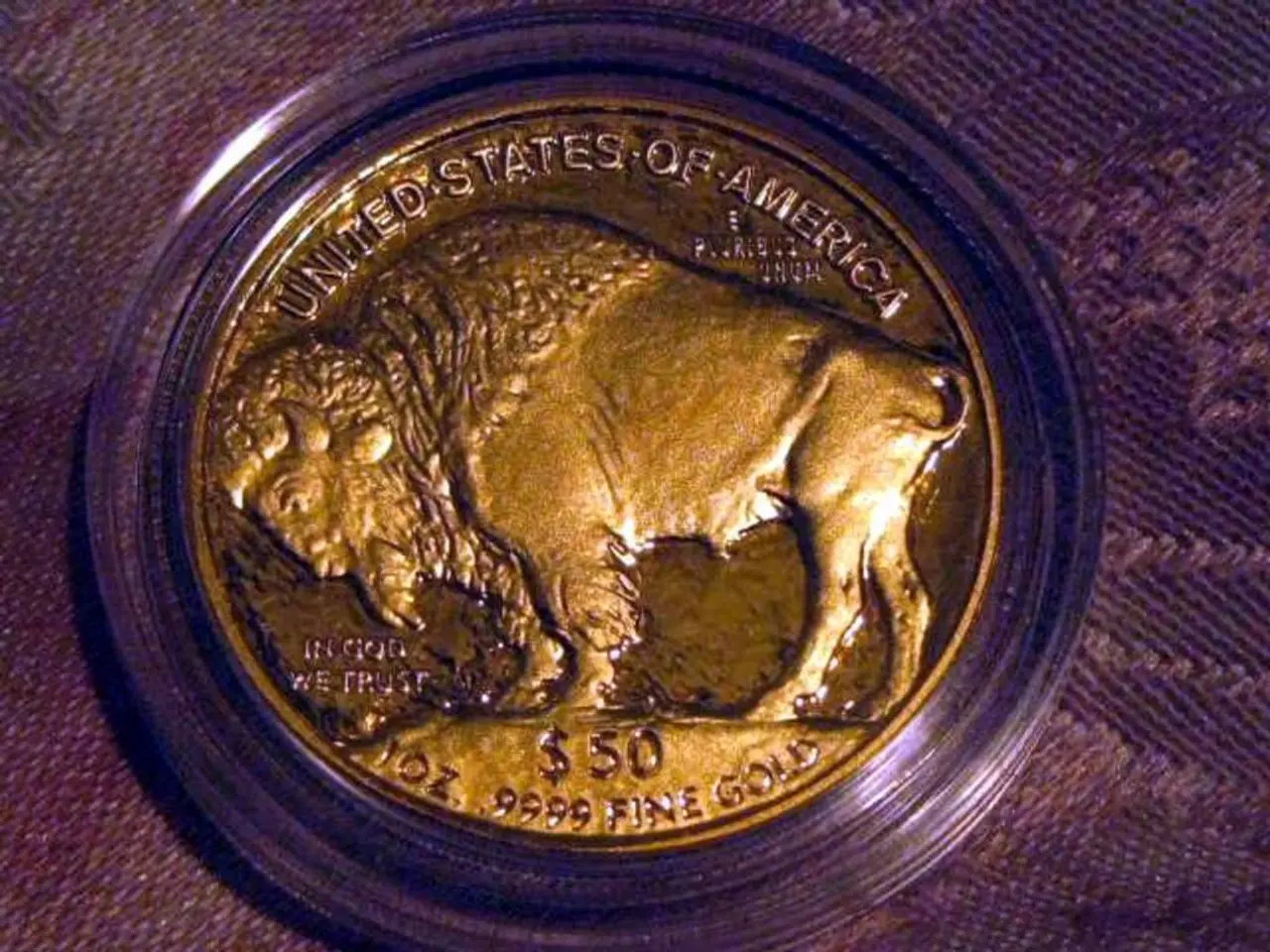
Texas authorizes the formation of a strategic Bitcoin reserve under SB 21 legislation
Texas is making a bold move to position itself as a leader in the adoption of blockchain technology and cryptocurrency within the United States. With the approval of Senate Bill 21 (SB 21), the Lone Star State has established a strategic Bitcoin reserve (SBR) [1][3].
The SBR, managed by the Texas state comptroller, is a special fund outside the state treasury that allows Texas to acquire and hold up to one million Bitcoin over five years for long-term investment [1][3]. The funds for this reserve can be appropriated by the legislature or generated from reserve revenues.
The SBR's creation is expected to have several significant impacts:
- Positioning Bitcoin as a Strategic Asset Class for state funds, similar to gold or other reserve assets, reflecting growing acceptance of digital currencies as part of public financial management [1].
- Attracting Crypto-Related Professionals and Businesses to Texas by signaling a favorable regulatory environment for digital assets [1].
- Creating a New State-Level Investment Framework that could influence federal policy if successful and encourage other states to follow suit, possibly affecting Bitcoin's market by removing significant supply from circulation due to long-term holding [1].
- Supporting Innovation in Digital Asset Policy and expanding the financial strategies available to states with regard to cryptocurrency investments [1].
The bill also allows qualified third parties to manage the reserve, and requires that investments be made in digital assets with large market capitalizations (at least $500 billion average over two years), reinforcing a focus on established cryptocurrencies [1].
Moreover, the bill allows for the possibility of accepting donations from both the public and private sectors to increase the reserve [1]. Texas, as the eighth-largest economy in the world, could serve as a model for other states [2].
The public comptroller will also have the power to acquire, custody, and manage digital assets [1]. Cold storage wallets and qualified custodians will be used for security purposes [1].
The strategic position of Texas within the national landscape could solidify its reputation as a financial innovation hub [2]. By bolstering its financial resilience against inflation and economic volatility, Texas joins New Hampshire and Arizona as states with official Bitcoin reserves [2].
Governor Greg Abbott has a 10-day deadline to sign the law, veto it, or allow it to take effect without his signature [2]. If signed, Texas' move towards integrating Bitcoin into its public finances could attract investments and foster the development of the crypto industry.
References:
[1] "Texas Senate Bill 21: Establishing a Strategic Bitcoin Reserve". [Link to the bill text] [2] "Texas Senate Approves Bill to Create Bitcoin Reserve". [Link to news article] [3] "Texas Senate Bill 21 Explained: What It Means for Bitcoin". [Link to explainer article]
- The creation of the Strategic Bitcoin Reserve (SBR) in Texas, a special fund managed by the state comptroller, is poised to position Bitcoin as a significant asset class within the state's investment portfolio, reflecting the increasing acceptance of digital currencies in finance and business.
- Texas' strategic move to establish the SBR and its focus on attracting crypto-related professionals and businesses could potentially impact the technology industry, by creating a new state-level investment framework that might influence federal policy and encourage other states to adopt similar strategies, thereby potentially affecting the markets of established cryptocurrencies.