
Strategies for Identifying Drones at Night: 6 Useful Tips You'll Find Beneficial
In the ever-evolving world of technology, drones have become a common sight during the day. But what about at night? With the right tools and knowledge, nighttime drone detection is possible.
Visual Detection
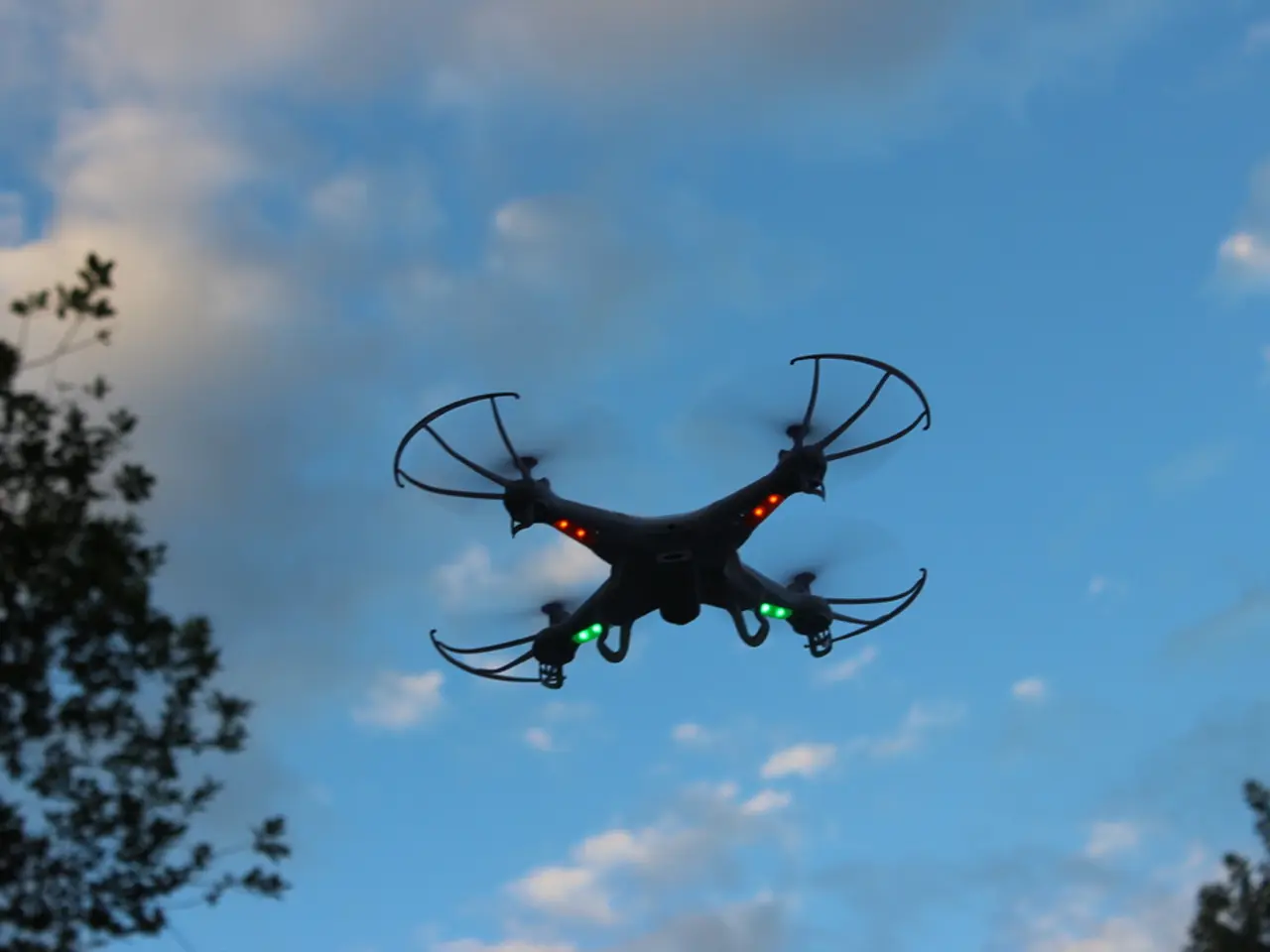
Drones at night primarily reveal themselves through their anti-collision lights, designed to be visible from up to 3 statute miles. These lights typically flash or blink and can include red, green, or white LEDs to help identify the drone's orientation and position in the dark sky. Sometimes, additional LEDs on portable landing pads or headlamps used by operators provide ground reference.
Auditory Detection
Drones emit a distinctive buzzing or whining noise generated by their rotors and motors. This noise varies in pitch and intensity depending on drone size and model but can be picked up if close enough or in a quiet environment. In some contexts, like conflict zones, drone sounds cause significant psychological impact, indicating how recognizable they are by their noise alone.
Technological Detection
Operators ensure compliance with FAA night flight rules, such as flying within the visual line of sight. This means drones are often accompanied by spotters or ground lighting aids. Nighttime drone use involves pre-flight planning to assess risks and ensure lighting equipment works properly.
Some drones may use GPS-based navigation and sensors like obstacle avoidance, but these systems are not externally visible, only detectable if the drone maneuvers in a certain way.
Tech Advancements
As technology advances, drone detection is expected to become more accurate and affordable by 2025. Frequency-switching technology will make it harder for drones to disguise their wireless signals from trackers. The global market for drone detection technology is expected to expand rapidly, with military demand and new commercial applications driving growth.
Thermal imaging devices are becoming more affordable and accessible to regular homeowners, making nighttime drone detection easier. Portable radar systems are now available for home security, delivering real-time drone alerts to smartphones.
Staying Legal
Keeping up with current FAA drone guidelines is important to stay legal while flying at night. New rules include equipping drones with anti-collision lights and adding questions about night flying to the Part 107 certification test. On April 6, 2021, the FAA updated its drone rules, letting people fly drones at night without special permits.
Spotting Drones in Cities
Spotting drones can get tricky in busy cities, though, as bright street lamps and ambient city glow hide their presence. However, with the right tools like binoculars, thermal cameras, radar detectors, or parabolic microphones, drones can be spotted quicker in low-light conditions.
In summary, at night, drones are most commonly detected visually by their flashing anti-collision lights and audibly by their rotor sound. Operators use standard lighting setups and planning to maximize visibility and minimize risks during these flights. With the advancement of technology, nighttime drone detection is becoming easier and more accessible for everyone.
- In the realm of technology advancements, thermal imaging devices are becoming more accessible to homeowners, potentially aiding in the easier detection of drones during nighttime.
- Ensuring compliance with FAA night flight rules, such as using anti-collision lights, makes drones more visible in the dark sky but also enhances their detectability by those practicing cybersecurity and technology during nighttime drone detection.