
Rocket Propulsion in Vacuum: The Mechanism Explained
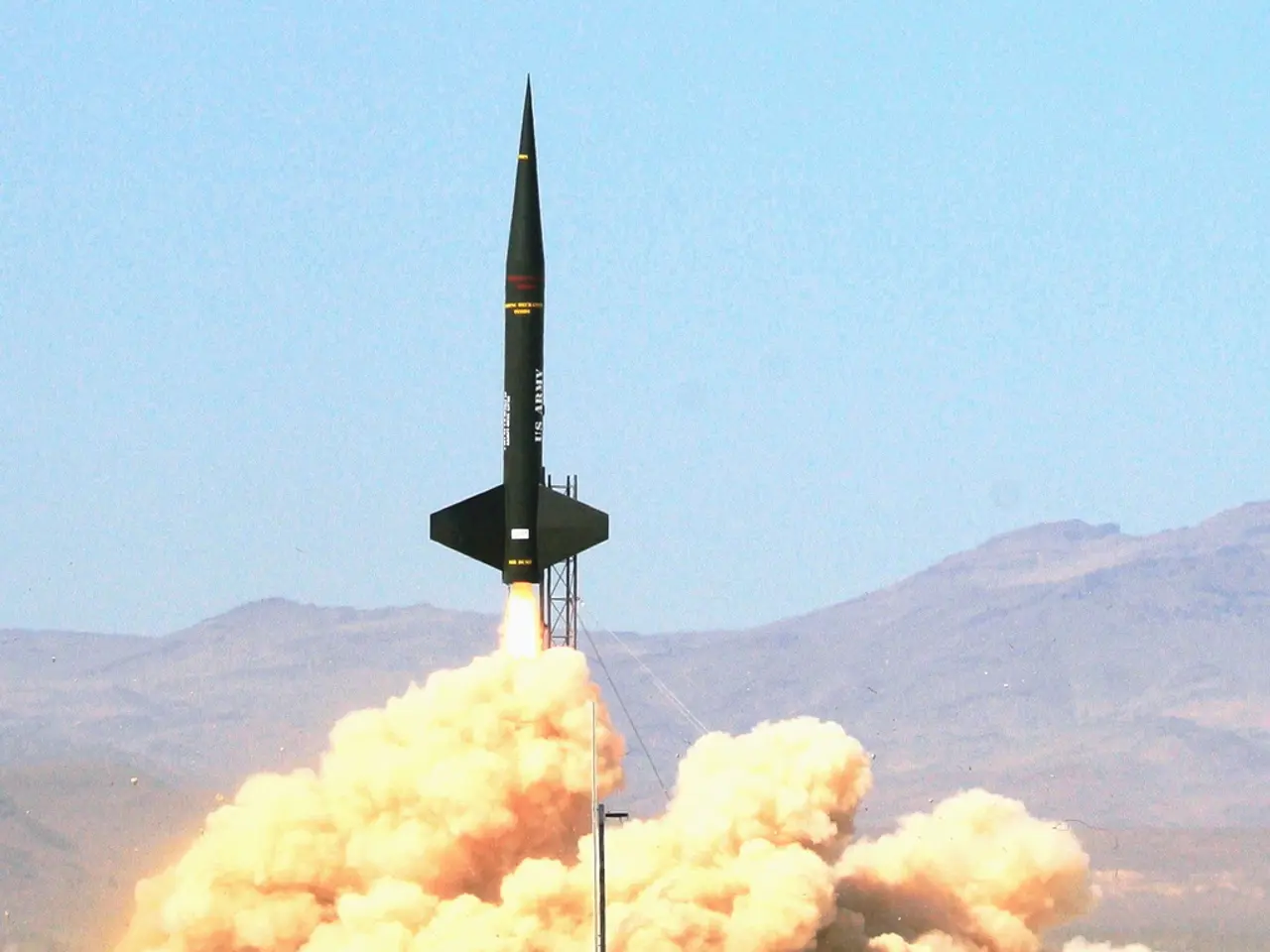
In the vast expanse of space, the traditional method of propelling spacecraft has been through the expulsion of mass, a concept rooted in Newton's third law of motion. This age-old practice sees rockets generating movement by ejecting propellant gases at high speed in one direction, thereby pushing themselves in the opposite direction. Even in the vacuum of space, where there is nothing to push against, this mechanism works due to the conservation of momentum [2].
While chemical rockets remain primary for launch and certain maneuvers, scientists and engineers are increasingly exploring alternative propulsion methods to reduce propellant mass and improve mission duration and efficiency.
One such alternative is electric propulsion, which includes ion thrusters and Hall-effect thrusters. These systems use electric energy to accelerate ions, thereby generating thrust. They provide continuous low thrust but with very high fuel efficiency, making them ideal for long-duration missions like deep-space exploration to the Moon, Mars, and beyond [1][3][5]. Solar panels typically supply the electricity needed to ionize and accelerate the propellant.
Another intriguing alternative is solar sails. These use radiation pressure from sunlight acting on large reflective sails to generate thrust without propellant consumption. This propellant-free method is under investigation for future spacecraft propulsion [1].
Researchers are also exploring advanced concepts such as relativistic electron beams and other exotic propulsion techniques to improve speeds and mission flexibility [1]. Testing of these alternative methods has shown promise, indicating a potential shift in the future of space travel.
It's essential to note that in the context of Earth, movement requires pushing against something else, such as the floor, water, or road. However, in space, adjusting course and propelling oneself requires a lot of fuel, mass, and cost. For now, the primary method for generating movement in space remains the expulsion of mass and the principles of Newton's third law of motion.
However, as we continue to venture further into the cosmos, these alternative propulsion systems may play a significant role in reducing costs and opening up new possibilities for space exploration. The future of space travel is undoubtedly exciting, and these alternative propulsion systems could be the key to unlocking the final frontier.
- The future of space exploration may be shaped by alternative propulsion systems such as electric propulsion, solar sails, and advanced concepts like relativistic electron beams, all of which aim to reduce propellant mass, improve mission efficiency, and possibly unlock the final frontier.
- One intriguing alternative is solar sails, which utilize radiation pressure from sunlight acting on large reflective sails, offering a propellant-free method for spacecraft propulsion that is currently under investigation.
- Scientists and engineers are increasingly exploring these alternative propulsion methods, such as electric propulsion and solar sails, as they strive to breach the limitations of traditional propulsion technologies in the realm of space-and-astronomy, driven by the future advances in technology and the pursuit of greater mission flexibility.




