
Petrochemical industry's innovative approach addressing electric vehicles' significant historical disadvantage
Advances in bio-based materials and recycling technology are set to revolutionize the tire industry, creating tougher and longer-lasting tires for electric vehicles (EVs). This shift is driven by collaborations between the automotive and tire industries, aiming to meet the unique demands of EVs while enhancing safety, performance, longevity, and sustainability.
One key development is the use of AI-driven tire design optimization. By employing artificial intelligence, tire designers can create designs that balance torque, weight management, and rolling resistance, improving durability and performance for EVs. This technology also helps detect defects early, reducing downtime and repair costs, while enhancing resilience and safety [1].
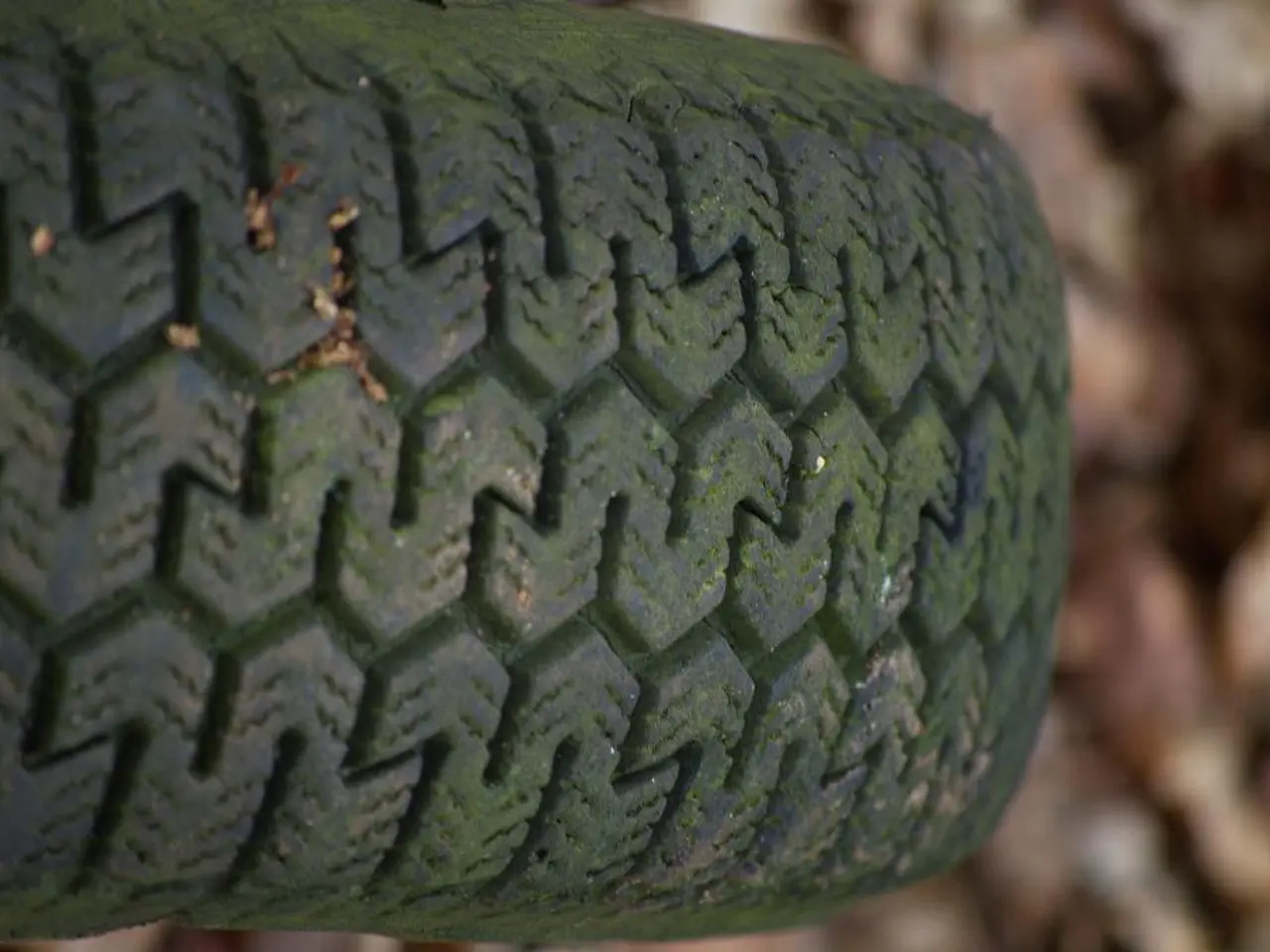
Another significant innovation is the development of advanced tread technologies. Tires like Hankook’s e-SMART City AU56 use advanced tread block technology, improving grip and extending tread life. This is particularly crucial for EVs, given their different load and torque characteristics [2].
Manufacturers are also integrating a high share of renewable, recycled, and certified sustainable materials into tire production. Examples include ISCC PLUS certified materials, which help produce more durable, environmentally friendly tires without sacrificing performance [2][5].
Noise reduction innovations are also a focus, with EV tires designed with specialized acoustic foams to reduce road noise. This may also impact durability by managing vibrations and wear [3].
Energy efficiency and rolling resistance are equally important considerations. EV tires such as Hankook’s iON brand prioritize low rolling resistance combined with energy efficiency and durability, crucial for extending tire life given the high torque and instant acceleration typical of electric vehicles [2].
Maintenance tips, such as monitoring tire pressure and regular rotation, remain crucial for extending the lifespan of tires in electric vehicles. However, electric vehicle drivers may face higher maintenance costs due to increased tire wear [4].
The future of tires in an EV-dominated world requires a balance between durability, performance, and fine particle emissions. Specialized tires, often more expensive, will be essential for safe and economical driving. The benefits of this future include increased innovation and sustainable solutions, but consumers may face higher costs [6][7].
The US-South Korea partnership is laying the foundation for the future of electric vehicles, with both countries investing heavily in research and development [8]. Overall, the integration of AI, advanced materials, and targeted tread designs is enabling the production of EV tires that offer longer mileage, better grip, enhanced safety, and reduced environmental impact [1][2][5].
In conclusion, the future of tires in an electric vehicle world promises increased innovation, sustainability, and performance. While there may be drawbacks for consumers in the form of higher costs, the benefits include a greener, safer, and more efficient driving experience.
- The integration of AI-driven tire design optimization is helping create designs that balance torque, weight management, and rolling resistance for electric vehicles, improving their durability and performance.
- Advanced tread technologies, like the one used in Hankook’s e-SMART City AU56 tires, are being developed to improve grip and extend tread life, especially for electric vehicles due to their unique load and torque characteristics.
- Manufacturers are incorporating a significant amount of renewable, recycled, and certified sustainable materials into tire production, ensuring the creation of more durable, environmentally friendly tires without compromising performance.
- Noise reduction innovations in EV tires, featuring specialized acoustic foams, are aimed at reducing road noise and managing vibrations and wear to improve durability.
- Energy efficiency and rolling resistance are key considerations in the development of EV tires, with brands like Hankook's iON prioritizing low rolling resistance, energy efficiency, and durability for extended tire life in electric vehicles.




