
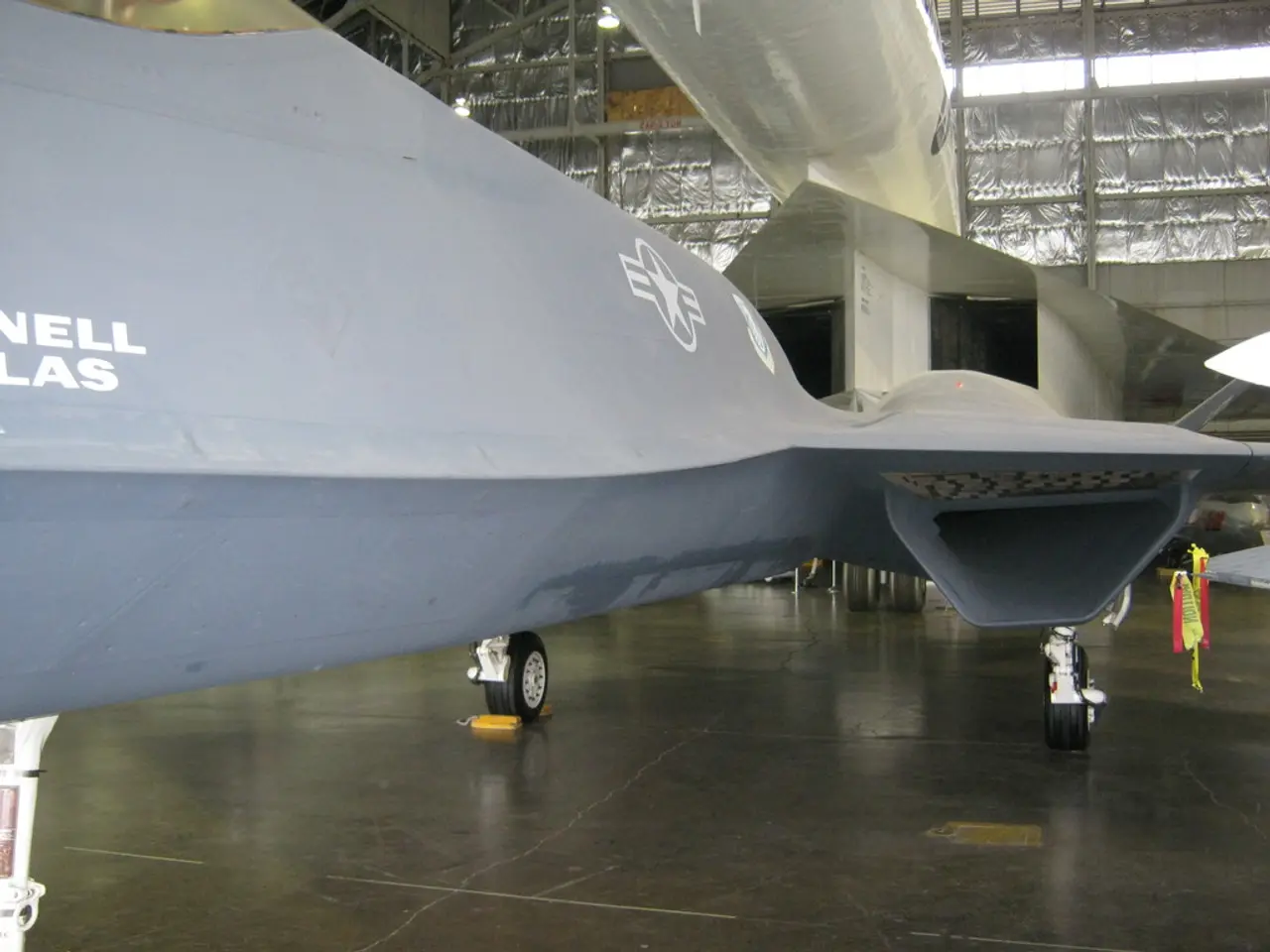
Is it possible to travel from New York to Los Angeles within 12 short minutes?
In the realm of aviation, the pursuit of hypersonic passenger planes continues to captivate scientists and engineers worldwide. These aircraft, capable of speeds beyond Mach 5, could revolutionise intercontinental travel, slashing flight times dramatically. However, as we stand in mid-2025, such aircraft remain in the experimental phase, with numerous challenges to overcome before they become a commercial reality.
Richard Branson's Virgin Galactic is one of the companies leading the charge, planning to carry passengers to the edge of space on SpaceShipTwo, a six-person rocket glider. Meanwhile, Space Exploration Technologies Corp. (SpaceX) has delivered cargo to the International Space Station (ISS) using a more traditional rocket-and-capsule approach.
Yet, hypersonic passenger planes are not yet commercially available. Key engineering challenges remain, particularly thermal protection to withstand extreme heat, stability and control at hypersonic speeds, and developing economically viable aircraft. Companies and agencies are working on engines and airframes capable of sustained hypersonic flight, such as hybrid propulsion systems combining turbojets, ramjets, scramjets, and innovative rotating detonation engines.
One of the more publicized developments is the Sabre engine project, with a development cost around GBP 6 billion. It is projected to eventually enable drastically reduced flight times, like London to New York in one hour. However, commercial deployment will only occur once technology, safety, and cost issues are resolved. Realistic timelines suggest it might take several more years to decades before hypersonic passenger planes become a reality.
NASA, for now, is focusing more on air taxis and supersonic flight control than on hypersonic commercial passenger craft. DARPA, on the other hand, aims to develop Prompt Global Strike vehicles, planes capable of reaching targets worldwide with little or no warning in 60 minutes or less.
Some companies are thinking beyond traditional fuels. The Zehst system, a seaweed-biofuel-powered hypersonic plane, is under development and planned to be rolled out around 2040 or 2050. It will travel at double Concorde’s speed and altitude and carry 50-100 people between Paris and Tokyo in 2.5 hours.
HyperMach has announced SonicStar, a sonic-boom-less plane designed to fly twice as fast as Concorde. Yet, supersonic flight might return before hypersonic passenger planes become a reality. For instance, SpaceShipTwo, while not a hypersonic plane, is planned to carry passengers to the edge of space.
As we look to the future, it's clear that hypersonic passenger planes represent a high-potential frontier in aviation. However, substantial scientific, engineering, and economic hurdles remain before we can expect to see these aircraft carrying passengers across the globe in under an hour.
References:
[1] Hypersonic Flight Technology [2] Hypersonic Air Travel: A Dream or Reality? [3] NASA's Hypersonic Flight Research [4] The Race to Develop Hypersonic Air Travel [5] NASA's Hypersonic Research Program
- The aspiration for hypersonic passenger planes has ignited a global fervor among scientists, engineers, and companies in the realm of technology.
- In the domain of movies, visuals of high-speed travel across continents in a matter of minutes are often depicted, hinting at the allure of such technology.
- An environmental focus emerges as some companies think beyond traditional fuels for hypersonic planes, with the Zehst system planned to be seaweed-biofuel-powered.
- The physics of sustaining such high speeds over long distances and the engineering challenges of constructing aircraft capable of these feats are significant barriers to commercial hypersonic travel.
- History may recall the early 21st century as a pivotal period in the development of space travel, with companies like Virgin Galactic and SpaceX making significant strides in this field, while the hypersonic passenger plane remains a future dream.
- As sports often push human limitations to their extreme, the development of hypersonic passenger planes encapsulates a similar spirit, striving to redefine travel speeds and break technological boundaries.