
Identifying Precious Assets Globally: Key essential facilities are being pinpointed
In a significant breakthrough, researchers at Vrije Universiteit Amsterdam have compiled a spatial dataset of critical infrastructure around the world. This dataset, which includes the location of 39 types of critical infrastructure, can be used by researchers to develop contingency plans in case of local emergencies and to identify locations with high concentrations of critical infrastructure.
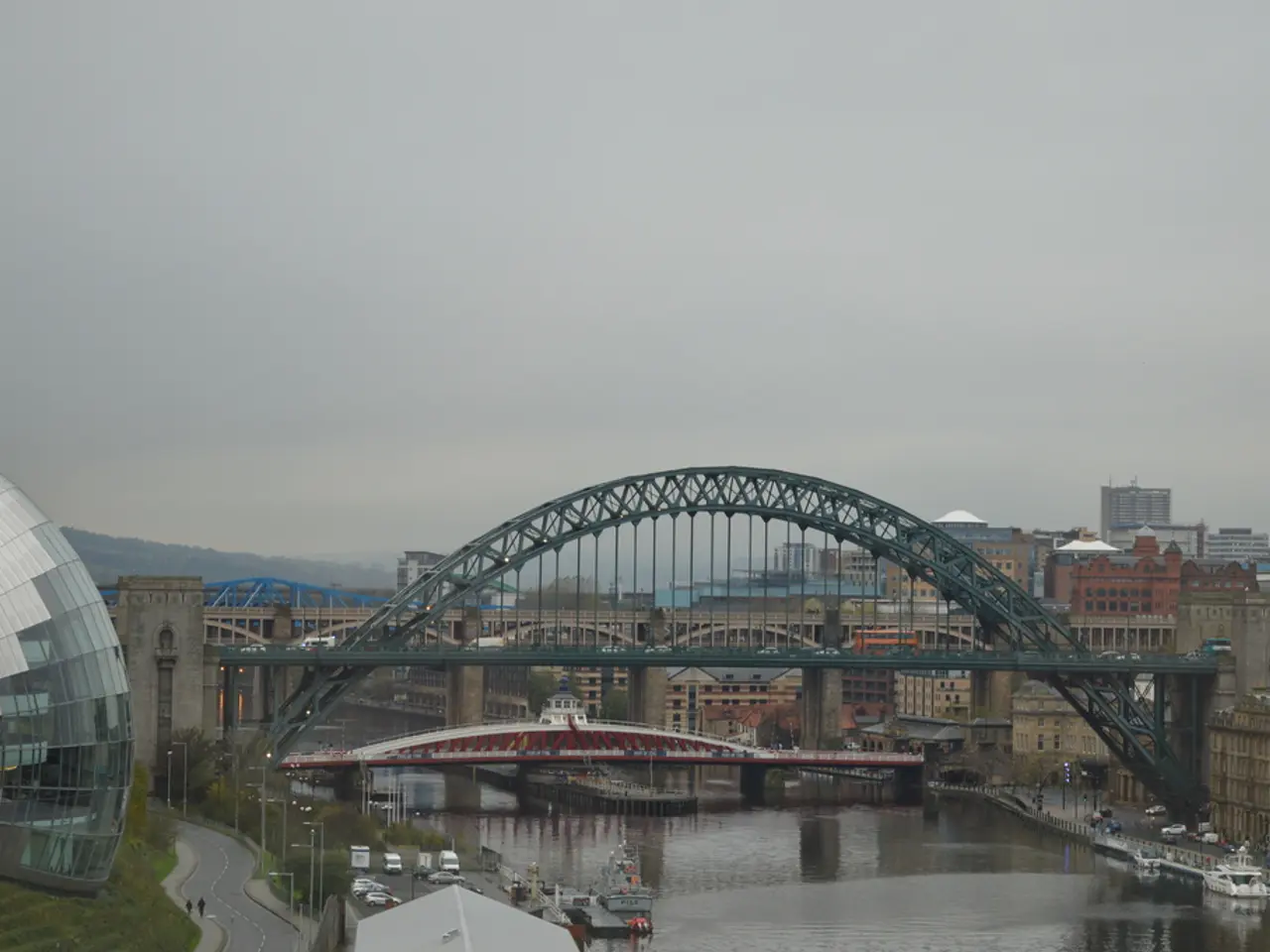
The dataset groups the types of critical infrastructure into seven categories: education, energy, health, telecommunication, transportation, waste, and water. However, the image accompanying this article, credited to Flickr user Rockin'Rita, does not provide any additional information about the researchers or their work, nor does it indicate any new use or application of the critical infrastructure dataset.
The image does not suggest any collaboration or partnership with Flickr user Rockin'Rita in the research project, nor does it contain any specific location or type of critical infrastructure. It also does not provide any new insights or perspectives on the importance of critical infrastructure, and it does not show any potential risks or vulnerabilities of critical infrastructure.
Despite the lack of a direct link or explicit instructions to access the dataset, there are several ways to find it. General research data sharing practices suggest that datasets linked to academic research are often available as supplementary materials on the repository or project page of the associated publication. Identifying the specific paper or report by VU Amsterdam researchers detailing the global critical infrastructure dataset and looking for data availability statements or supplementary files could help.
Additionally, VU Amsterdam or projects led by their researchers often deposit datasets in institutional repositories or public data platforms such as Zenodo, Figshare, and others. Searching these platforms with keywords like “global critical infrastructure” and “Vrije Universiteit Amsterdam” could yield positive results.
If the dataset is not public, reaching out to the lead researchers or project coordinators at VU Amsterdam through their university webpages or research profiles is a common academic practice for data access requests.
Finally, since the infrastructure dataset is global and spatial, it might be hosted on platforms like the European Data Portal or global geospatial data repositories linked or referenced in related publications.
In summary, to access the spatial dataset of global critical infrastructure created by Vrije Universiteit Amsterdam researchers, you should:
- Identify the exact publication or project name associated with this dataset at VU Amsterdam.
- Review the paper’s supplementary info or institutional repository.
- If not public, contact the research group at VU Amsterdam.
If you provide the name of the specific research paper or project, further assistance in narrowing down the data access route can be provided. The image accompanying this article is not directly related to the dataset of critical infrastructure.
- The dataset of global critical infrastructure created by Vrije Universiteit Amsterdam researchers can be found by identifying the specific publication or project associated with it and reviewing the paper's supplementary information or institutional repository.
- If the dataset is not public, it can be requested by contacting the research group at Vrije Universiteit Amsterdam through their university webpages or research profiles.